Showing posts with label Billy Bang. Show all posts

Friday, September 28, 2012

Sound Craft 75 - Fantasy for Orchestra
Earl Freeman / Universal Jazz Symphonette [Anima 1001]


Soundcraft 75 - Fantasy for Orchestra
The Universal Jazz Symphonette

Side A
1. Nemesis

Side B
1. Oreo
2.Alpha

Earl Freeman director, composer
Zane Massey tenor saxophone
Daniel Carter tenor saxophone
Kappo Umezu tenor saxophone
Ernest Washington tenor saxophone
Raphe Malik          trumpet
John Marshall trumpet
Malik Baraka trumpet
Daniel Carter alto trumpet
John Mingione flugelhorn
Michael Keith trombone
Richard Dunbar         french horn
Nancy Ancrum flute
Art Bennett         flute
Andrew Strasmech flute
Henry Warner clarinet
James Emory electric guitar
Mel Smith         electric guitar
Tyrone Nickens electric guitar
William Parker bass
Dave Wertman bass
Paul Chambers Jr         fender bass
Billy Bang         violin
Charles Burnham violin
Wade Barnes percussion
Roger Baird         percussion
Julio Cesar         tabla
Adeyeme(Philip Spigner) congas
Robert Sardo grand organ
Barbra Blick         reading
Patsy Wilkins (Patricia Nicholson) reading


Anima Records AN1001
1975


Earl Freeman

This LP is the brainchild and creation of Earl Freeman - the closest thing there is to a 'leader's date' in his small - but always interesting - discography of appearances on record.
Earl Freeman was a talented, strange, sensitive artist who played acoustic bass, electric bass guitar - piano, flute, harp and percussion. He wrote poetry, and was a graphic designer - the unusual pen and ink contour-hatched illustration that takes up most of the front cover here is his.

Originally from California, and later working with Sun Ra's band in Chicago, Freeman travelled to Paris in 1969 and ended up as part of the BYG/Actuel recording frenzy of American free jazz players in that year.
Not so much a 'big name', as more of an outsider  -the word crops up again and again in descriptions of him - it was Kenneth Terroade the Jamaican tenor player who Freeman credited with an introduction to the Parisian scene.


Kenneth Terroade (left) with Earl Freeman (right)

Freeman appeared - memorably- on Terroade's great Love Rejoice LP (Actuel 22), as part of a two-bass lineup with Beb Guerin. He played bass on a bunch of Archie Shepp recordings from this time too, 


 as well as harp with Alan Silva's Celestrial Communications Orchestra and percussion instruments on a handful of BYG and 'America' LPs from around this time.
He appears on the very first Gong LP (BYG/Actuel 5) and performed at the legendary Amougies Actuel Festival in October 69.


left to right - frank zappa, philly joe jones, earl freeman, louis moholo, johnny dyani, grachan moncur, archie shepp. Amougies, Belgium october 1969 (foto - jacques bisceglia)

The twin bass approach with Beb Guerin was again used on Clifford Thornton's Ketchaoua (Actuel 23), memorably on the wonderful last track - 'Speak With Your Echo (And Call This Dialogue)'.


Both Freeman and Thornton were eventually barred from France as being undesirables with an overtly radical political stance. Freeman seems to have claimed that on his part - this was largely through misunderstanding and that he had no overt political stance.
He did go on a North African 'back to the roots' trip with Archie Shepp, Steve McCall, Cal Massey and Don Byas - with Eldridge Cleaver acting as tourguide !

[ Worth noting that Cal Massey's son Zane plays saxophone here on Soundcraft 75 ]

Despite being persona non grata in France, and making jaunts to both Holland and Britain - he returned to Paris - living there clandestinely when Val Wilmer interviewed him in early 1972.
By then he had recorded in London on drummer Selwyn Lissack's 'Friendship Next Of Kin' [which includes a spoken recitation from Earl]


- as well as a session with UK saxophone monsters Mike Osborne, John Surman and Alan Skidmore. With a second bass player - Harry Miller this time, and with Louis Moholo on drums, this was eventually released as 'Shapes' under Osborne's name - [ highly recommended ].


Freeman had also previously recorded in Noah Howard's group in Holland for the 'Patterns' LP from late 1971


Later in 1972 however, Freeman left Europe, returned to the USA and rejoined Noah Howard - appearing on Howard's 'Live at The Village Vanguard' record on Freedom Records with Frank Lowe, Rashied Ali, Juma Sultan and Robert Bruno.


In 1975, he put together the enormous group on Soundcraft 75, adding choreographers and dancers for a performance at the Washington Square Methodist Church on West 4th St, NYC  ('The Peace Church') - and chose the name Universal Jazz Symphonette for the project.


7 years later, Earl is playing electric bass with Sonny Simmons' group- again in a 2-bass configuration - on one of the two sessions that made up Simmons' Global Jungle


1984 - probably the last year of Earl's life, saw a  recording of his group with Henry P Warner and Adeyeme (Philip Spigner) - The Freestyle Band.  This trio recorded just one album which was privately released. Recently reissued, this is both fascinating and fantastic. 


Playing what sounds like a fretless electric bass through a phaser and perhaps a chorus unit, Freeman lays down basslines underneath Henry Warner's plangent clarinet and Spigner's dynamic congas to create a group sound that is totally sui generis in its field.

In the liner notes to The Freestyle Band's re-release CD, Ed Hazell reports that Freeman collapsed during a performance some time in 1984 "probably not long after that" he died. And that appears to be all that is known of Freeman's passing from the world.

A US armed forces veteran, Freeman shaved his hair very close, dressed only in dark colors and wore huge circular glasses - tinted or prescription. He frequently wore a leather aviators helmet, a steel service helmet, or both.


(foto - juma sultan's aboriginal music society box - eremite records)


The Album - Soundcraft 75

This was the first recording and release on the Anima label.

Associated with Billy Bang, who issued 5 LPs on Anima - the label actually belonged to John Mingione, a trumpet and flugelhorn player who ran it from a storefront on East 5th Street in Manhattan. He appears on this LP, and more recently, some of his playing with William Parker has resurfaced here.  I know of no other instances of him actually performing on record. He produced or co-produced all the label releases.
This was the 1st release on Anima in 1975. The final release was in 1982.

It's a large ensemble - nearly 30 players and is not a high fidelity recording by any stretch of the imagination.
The church acoustics, the size of the ensemble, the collective free-form style of musical approach all combine to produce a sonic result that I can best describe in one word as - dense.
Musically - on first blush, it's chaotic. If you've just spent a morning listening to and loving Alan Silva's Lunar Surface, followed by Dave Burrell's Echo - then this is record you might like to put on next.
Only this one is not as well recorded as those 2. . .
The keen ear, or subsequent listening, will reveal that it's not necessarily 40 minutes of mad chaos - that there is movement here, there are dynamics, there are some themes of sorts, and that there is solo playing (where audible) of a high calibre.
Opening with a swirling trio of flutes and spare percussion, additional instruments are applied in successive layers like paint until the whole ensemble is all in - a vast melange of sound.
Then after a hushed intermezzo at around the 5 minute mark, the music builds again and things begin in earnest.  The technique is repeated again, punctuating solos from trumpet, tenor saxophones and violin.
The soloists are actually not that difficult to make out - what is difficult to hear is what is going on musically in the vast sonic soup that is behind and around them.

Earl was fond of a good quasi-mystical recitation it seems, and Orea (Side B) opens with 2 recitations from female voices: - the first a mystical paean involving Jesus Christ and the second a seemingly randomly chosen poem in French.
The music builds again from here into a huge seething amorphous out-of-focus thing.

Brass and reed soloists are again, clearly discernible in the sonic foreground - at one point with 2 tenors - extremely clearly.
As to the background - it's clear that there are some written parts - even section work. And that the ensemble is being actively directed or conducted - it's no unfettered group improv freak-out.  It is just quite difficult to make out what is going on back there because of the quality of the recording.
I'm certain that the acoustics of the church didn't help in documenting such a large group.

In the excellent sleeve notes to The Freestyle Band's CD re-issue, Ed Hazell mentions Soundcraft 75, and lauds it as "..a valuable document of early work by Parker, Carter, Raphe Malik, Bang, and many other young free-jazz players of the early loft years..". Whilst I guess that is true in a way, it would be an utter challenge to hear - for instance - a single note on here that William Parker plays. Or Henry Warner for that matter. Or the tabla player...

Read Hazell's notes here, or go here for the excellent Freestyle Band CD

It's probably safe to assume recording conditions and equipment may have been a little rough - near the beginning of the record, a microphone is audibly scuffled and bumped and there are a few odd stereo channel leaps throughout.
The fades you hear are exactly as per the LP and haven't been changed in any way by me.
Technically, side 2 consists of 2 pieces - there is such a small gap between the 2 that I've left the whole second side as a single track - assuming somewhat of a symphonic intent on the part of Freeman.


The back jacket abounds in mis-spellings of the musician's names - "Henry Warnef" for Henry Warner, "Kappo Umega" for Kappo Umezu,  etc etc.
I've corrected the names that I know are clearly wrong - but any other corrections I've missed that are warranted - are welcome.
That this was a live performance, incorporating dancers - is evident by the credits for choreography.

As to the Washington Square Methodist Church - you can visit New York City and see it still - or the facade of it anyway.
You can't go in - it's no longer a church, it's private property.
These men


 - sold it.
"...now this graceful artifact enters a new beginning as Novare, a limited edition portfolio of eight extraordinary loft homes by the visionary architects at FLANK Architecture.. .Come to be reborn"
There's more of this sleazy drivel on their real-estate-for-the-brain-bogglingly-wealthy website.
Which seems like a truly sad way for the little church to end.
Me, I'd take 1975 any day.


So there you go - I hope you enjoy Soundcraft 75.
At least you can say that you've heard it, which hasn't been that easy for most - it's quite a rare record it seems

It's idiosyncratic, it's chaotic, it's 'fatally flawed' I suppose.
But at the same time it possesses something very akin to what I can only call a kind of grandeur.


Interesting Links

The Freestyle Band (Earl Freeman, 
Henry Warner, Adeyeme) - Self Titled, Re-issued album.
No one else made a sound like this -  Highly recommended .  Earl on processed electric bass
In the US - on the excellent 50 Miles of Elbow Room - http://www.50milesofelbowroom.com/artist/106-the-freestyle-band-henry-warner-earl-freeman-philip-spigner.html
In Europe - No Business Records
http://nobusinessrecords.com/NBCD41.php


Website of the estimable and overlooked Mr Henry Warnerhttp://henrypwarner.com/

Bio of Earl in the liner notes to The Freestyle Band, by Ed Hazell - http://theshop.free-jazz.net/henry-p-warner-earl-freeman-philip-spigner-freestyle-band-no-business-records/shop/music-label-and-artists/

The outstanding Noah Howard 2-on-1 CD that contains Patterns with Earl Freeman, as well as the fantastic Message To South Africahttp://eremite.com/album/mte-19

Wonderful box set on the same label (eremite) that features another underappreciated Earl (Earl Cross) - and the source of the photo of Earl Freeman standing in the street - http://eremite.com/album/mte-54-55-56

The obscure 'underground classic' - Selwyn Lissack's only album, featuring Earl Freeman - Friendship Next of Kin  http://www.jazzloft.com/p-45348-friendship-next-of-kin.aspx

Earl duetting with Harry Miller (acoustic) and playing with a shit-hot band [Mike Osborne, John Surman, Alan Skidmore, Louis Moholo] - Mike Osborne - Shapes
http://www.fmr-records.com/artistresults.asp?letter=M&artist=Mike%20Osborne


"“The music opens up their minds, opens up their hearts – it’s subversive, but it’s pure!”
- Earl Freeman 1972 -


Friday, July 15, 2011

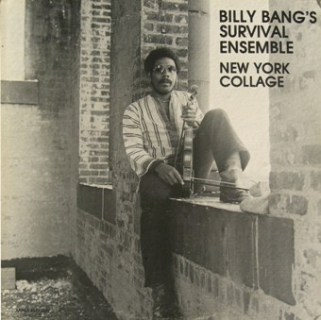
New York Collage - Billy Bang's Survival Ensemble [Anima AN-1002]


New York Collage
Billy Bang's Survival Ensemble

Billy Bang - violin, poetry, bells, shaker, percussion
Bilal Abdur Rahman - tenor saxophone, soprano saxophone, bull-horn, percussion
Henry Warner - alto saxophone, bells, shaker, percussion
William Parker - bass
Khuwana Fuller - congas
Rashid Bakr - drums

Side A

1.Nobody Hear The Music The Same Way (Dedicated to John Coltrane) [Billy Bang]
2.For Josie Part II [Billy Bang]

Side B

3.Illustration [Poetry - B Bang, Music - Bilal A Rahman]
4.Subhanallah [B.A. Rahman]

Anima Records A.N. 1002
1978

[EDIT] - Feel free to read on for my ramblings re. this record - they still stand. In what is rather exciting news though, this HAS BEEN REISSUED ON CD, along with another HITHERTO UNRELEASED SURVIVAL ENSEMBLE RECORDING. Amazing and thrilling at the same time: - it's called Black man's Blues / New York Collage - 2CD, and LP. Label is NoBusiness, link here - http://www.nobusinessrecords.com/NBCD30-31.php
Access to original tapes was apparently involved. This is good.
Download link here for this is now pulled, and I'd urge people to consider this new reissue.
Review here [or at least a few words] , as soon as I get my copy ..
[/EDIT]


This is the first Billy Bang record. The band, the Survival Ensemble, is a sextet - it's from 1978.

The few reviews that will find of this record on the web will suggest to you that it's vaguely interesting in a historical sort of way but inessential musically - 'diverting juvenilia' in almost as many words.
That - is crap. It's a great record.

Of it's time sure - but revealing of the reality of Billy Bang's 1978 - a reality you can still smell and feel and that has grip and resonance even now - 33 years later in a world that bears little resemblance . . .

The tunes are not complex, not the section-work razor-sharp - but it grooves and it crackles throughout with a totally unpretentious honesty and urgency. Both 'outside' and 'in' - a concept that will be familiar to longtime fans of Bang's. And some of the simple arranging, is quite beautiful. It's noticeable that Billy plays with a lighter bow and touch than he came to use later on, when he developed that *deep,deep* horsehair attack.

'Illustration' is a spoken-word piece, a protest poem - engaging socially, politically, poetically - in a way that works (and still stands up) better than many more well-known famous poetic efforts of the era.
'Subhanallah' is a concise 1/4 hour of grooving tear-it-on-down that's fantastic
The Coltrane dedication is in "Nobody Hear The Music The Same Way" - I don't hear the Coltrane in the music [explicitly I mean] but I love the *song* the band makes here
'For Josie Part II' is driven through its atmospheric shapes by Rashid Bakr & Khuwana Fuller, but is a group performance of light and shade ...

Henry Warner on alto - is still active in NYC, after some time reportedly away from public musicmaking in the 80s/90s. A veteran of the NYC lofts of the 70's, he's on Bang's 'Outline #12' record (1982), as well as on William Parker's first record . Warner's webpage, with contact email is at http://www.henrypwarner.com/
Go to http://www.vibrationaltherapists.com to check out his Vibrational Therapists band.

Bilal Abdur Rahman is a mystery and a cipher. Would love to know more about him. Anyone? ... This seems likely to be the only released recording he appears on.
A tune of his called 'Know Your Enemy' was recorded by Bang a number of times on later albums. He is credited with both tunes on side 2 here. He generates a great head of steam and plenty of excitement on Subhanallah, propelling the music forward madly.

Rashid Bakr is fantastic (some places here he's hitting *really hard*)

And Parker is exceptional - with or without a bow - a mighty player.

(John) Khuwana Fuller - like Warner - also appeared on 'Outline #12' 4 years later with a different band.

A Note on The Sound
This sounds almost exactly the same as the vinyl record does in this room - no noise reduction, or signal processing other than *manual* de-clicking. Initially, I ran the recording through a sophisticated piece of auto-declicking software. The clicks and pops were largely gone, and the sound was much cleaner, but I felt that 'something' had gone from the edge of the music too. If I A/B'ed the 2 , I could *barely* tell the difference in the music - but it was there, almost imperceptible. So - I went back to the original and started de-clicking manually. My litmus test in approaching this was that if I could hear any difference whatsoever after a single click removal - even a perception of difference - then the click stayed in. If there were no detectable difference in any way in that portion of music, then the click was removed - and on to the next click. And so on. It took ages, but the result is pretty true to the original. The fact I have done no other processing, means that the general noisefloor is higher than a processed recording. The point here is that you can EQ it yourself if you want to make a 'personal listening' copy that you're comfortable with. I'm trying to make here the closest thing I can to the sound of the vinyl on my turntable - not master a CD. Admittedly, the (manual) click-removal is a concession toward listenability that a totally 'pure' approach would eschew. Closest I can get to imagining the sound of the new vinyl, store-bought, 1978 is the justification. Everything is relative of course, and in the end you're relying on my ears making all these qualitative judgments. Res ipsa loquitur.

The recording acoustic is slightly dry and boxy - the ear quickly adjusts.

Go buy some music – support musicians and keep them and their families alive. Otherwise there will be no next generation and our kids kids’ will have nothing but shit to listen to.

Buy Bang CDs – buy Henry P Warner’s CDs – buy Other Dimensions In Music CDs (W. Parker & Rashid Bakr).

If everyone just sits at home at their computers downloading the universe, then no-one is helped, no one is supported, no-one is energized, there’s no path forward.
Everyone just gets a lot of solitary pleasure true - but that’s just the same as masturbation.

So anyway - "What's the remedy for a Saturday Night Fever?"


Friday, June 3, 2011

Untitled Gift - Billy Bang [Anima 3BG9]


1982 - Quartet music.

The instrumentation is violin, pocket trumpet, bass and drums. Plus some extra flute work from Don Cherry and Bang himself. The timbre of the unusual combination of instruments is absorbing - and the playing excellent.

Bang and Cherry are great.

But cop a big ear too, to Wilber Morris and Denis Charles - just LARGE talents, that couldn't be unmusical if they tried.
Who's Denis Charles? The guy on the early Cecil records who went off to be a 30 year junkie? Yeah - that guy BUT. . .
listen (for example) to Maat here. Powerful, beautiful, musical, wonderful approach It's Denis fucking Charles man! He's fantastic and [I think] a vastly under-rated player.

A really enjoyable record.

Sadly - all these 4 guys are now gone.


Billy Bang - violin, yokobue flute, congas, bells
Don Cherry - pocket trumpet, flute, bells
Wilber Morris - bass
Denis Charles - drums

Side A
Echovamp 1678 [B.Bang]
Night Sequence [O.Coleman]
The Kora Song [D.Cherry]

Side B
Maat [B.Bang]
Levitation for Santana [B.Bang]
Focus on Sanity [O.Coleman]

Anima Records Anima 3BG9
1982


Buy The Recordings of The Musicians You Respect !!

Saturday, April 30, 2011

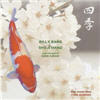
Changing Seasons - Billy Bang [Bellows 004]


Gratifyingly, many of Billy Bang's recordings remain in- print and available. On Soul Note, Justin Time, Black Saint , CIMP, and a fistful of smaller labels. Even 'oddities' like the solo violin 'Commandment' on the tiny 'No More' label can be obtained with minimal searching. That so many of the records are so good, and in so many diverse settings and styles, is a testament to the musicianship of the man.

Only a few things have slipped through the cracks and remain unavailable, with little likelihood of reissue. One of them was posted here, Feb 2009 (Live at Green Space with Charles Tyler).

Here's another one.

3 of the 4 tracks were recorded in trio with William Parker and the Japanese percussionist Toshi Tsuchitori. Then, a free-jazz avant-guardist, in the following decades Tsuchitori has explored worlds of ancient instruments, releasing a number of recordings including "“The Sounds of Prehistoric Painted Cave: Playing in the Cave of Cougnac, France”. For over 30 years he has collaborated on and off with British theatre and film director Peter Brook

The other Japanese musician on this record - on the 'Playful Spring' duet is trombonist Masahiko Kono. A determined experimentalist, in 1980 he would have been on a visit from Japan, having studied and worked there with Toshinori Kondo, tenor player Mototeru Takagi and violinist Takehisa Kosugi. Unlike Kondo, he moved to the USA permanently and has played extensively with groups led by Jemeel Moondoc, William Parker and William Hooker, as well as being a frequent member of Cecil Taylor's big band.

It is likely redundant to mention William Parker in an introductory context. Suffice to say that both Parker and Bang debuted on record within a year of one another (Parker 1973, Bang 1974) and that their musical association goes back at least to this time. More than 2 decades after Changing Seasons was recorded, the two formed, with Hamid Drake, the Violin Trio, releasing the beautiful Scrapbook album on Thirsty Ear. In the interim, Parker played bass on outstanding Bang records like The Fire From Within (Soul Note, 1984), and Sextet - Live at Carlos 1 (Soul Note, 1986).

The crickets (noted in the title of Track 1) are audible on all 3 of the 'Studio Henry' tracks - giving an evocative feel of a hot New York summer. The duo with Kono was recorded 2 days after Christmas of that year - at a guess, the 'Changing Seasons' of the title comes from the disparity between the 2 sessions (seasonally speaking).


160 kbps MP3's of this have been available in blogland for quite some time. Anecdotally, membership of a stern Russian free-booty site would allow you to access MP3s at 320. Hell, bits of this album have even appeared on YouTube (accompanied by a static photo).


But these are FLACs - from a clean LP copy and very low on the pop & crackle quotient.
The sound is good.

And the music is wonderful.


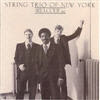
Seriously, consider buying some fantastic in-print Billy Bang music - it would be a fitting respect and farewell to the man. If you don't know his String Trio of New York or Soul Note or Justin Time records - you need them ! Any of these will pay royalties on sales to his estate - he is survived by his daughters Hoshi and Chanyez, his sons Jay and Ghazal, - and his partner Maria.

here's just 24 essential billy bang recordings...